A golf ball sleeve looks like a simple little box, and that is exactly why the material choice is easy to get wrong. The same three balls can sit inside a flimsy carton that dents in a gift bag or a crisp, substantial sleeve that feels like it belongs next to a premium ball. The difference is almost entirely in the board and the finish, decisions made long before anything is printed. Here is what those materials actually are and how to pick them for a custom sleeve.
The board is measured in points, and points decide the feel
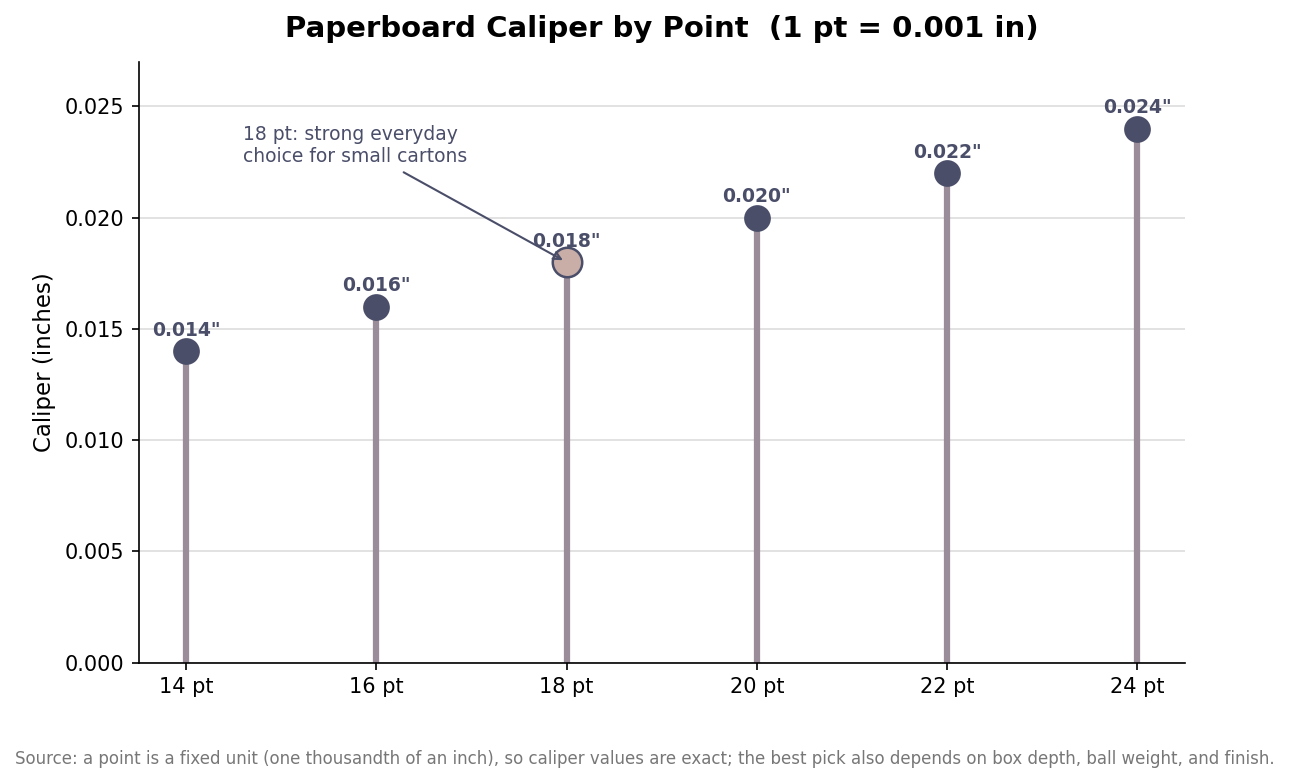
Paperboard thickness is quoted in points, and a point is a fixed unit: one point equals one thousandth of an inch. So 18-point board is 0.018 inches thick and 24-point is 0.024 inches, with no ambiguity between suppliers. Small folding cartons, which is what most golf ball sleeves are, typically live in the 14 to 24-point range. Lighter stocks around 14 to 16 points work for very small, light boxes, while 18-point board is the strong everyday choice for retail-style product cartons up to roughly a 2.75-inch square base. Step up to 22 or 24 points and the sleeve gets noticeably more rigid and premium in the hand; for reference, 24-point board is in the neighborhood of a credit card in thickness.
The practical read is that thicker is not automatically better. A sleeve that only has to protect three balls in a gift pack does not need rigid-box heft, but it should not flex like a cereal panel either. The chart below lays out the exact caliper each point value gives you, which makes the jump between one stock and the next easy to picture.
SBS, kraft, or recycled: the three grades to know
Thickness is only half the spec; the grade of board matters just as much. Solid bleached sulfate, or SBS, is the premium option: virgin fiber that is bright white all the way through with an ultra-smooth clay-coated surface. It delivers high stiffness for its caliper and the cleanest possible print reproduction, which is why it is the default for cosmetics, pharmaceuticals, and luxury goods. For a branded sleeve meant to look sharp, SBS is usually the right call.
Coated unbleached kraft, the natural brown board sometimes labeled CCNB or CUK, is the strongest grade with the best tear and wet-strength characteristics. Its brown interior and optional kraft look suit a rugged or earthy brand identity, and it stands up well to handling. Coated recycled board, or CRB, is the everyday workhorse behind most cereal and dry-goods cartons; it has a gray core, costs less, and prints acceptably, but its shorter recycled fibers make it less stiff and more prone to cracking on a fold if the scoring is not dialed in. For a sleeve, the choice usually comes down to whether you are optimizing for print brilliance and stiffness, for raw strength and a natural look, or for cost.
Sizing the sleeve to the ball
Materials only work if the box is sized correctly, and a golf ball sets hard limits. Under the rules of golf, a conforming ball has a diameter of no less than 1.68 inches, or about 42.7 millimeters, and weighs no more than 1.62 ounces. Three balls stacked therefore stand a little over five inches tall, so a classic three-ball sleeve typically runs in the range of 1.7 inches across by roughly 5.4 to 5.6 inches high, depending on whether it is a square tuck carton or a round tube and how much clearance the design leaves.
Those numbers matter for the board choice because a taller, narrower box flexes more than a squat one, so a five-inch sleeve benefits from that 18-point-and-up stiffness to keep its walls from bowing. Leave a small tolerance around the 1.68-inch ball rather than sizing to the exact minimum, so the balls load smoothly and the sleeve does not gap or split at the seams.
Finishes that change how the printed sleeve reads
Once the board and size are set, the finish is what a recipient’s eyes and fingers actually register. A gloss lamination is inexpensive and makes colors pop, while a matte lamination costs about the same but reads more understated and modern and hides fingerprints better. From there the premium options add both cost and impact: spot UV puts a shiny, raised gloss on a logo against a matte background for contrast, soft-touch coating gives the whole sleeve a velvety feel that signals quality the moment it is picked up, and foil stamping adds genuine metallic shine to a mark for the most upscale effect. The chart below places these against each other so you can see the general cost-versus-impact trade before you commit.
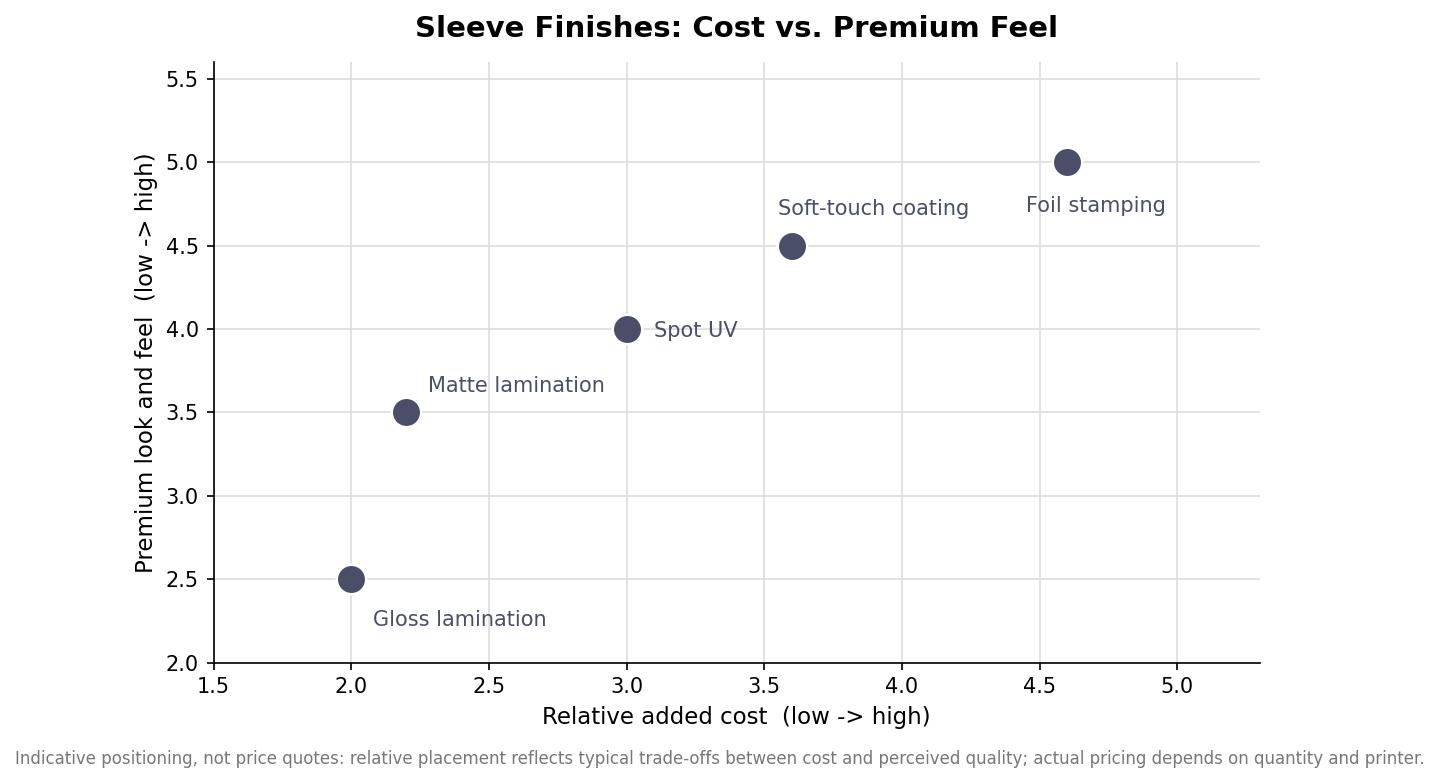
None of these finishes fixes a thin or poorly chosen board; they build on it. A soft-touch coating on flimsy stock still feels flimsy, so it is worth getting the caliper and grade right first and then choosing a finish that matches the impression you want.
Choosing a spec that matches the balls inside
The cleanest way to specify a sleeve is to work from the inside out. Start with the ball, which fixes the interior dimensions at just over 1.68 inches wide and a bit past five inches tall for three. Pick a board grade for the impression you want, with SBS for a bright premium look, kraft for strength and a natural feel, or recycled for value. Choose a caliper stiff enough for a tall, narrow box, which usually means 18 points or more. Then add a finish that fits the tier of ball inside, since a value ball rarely warrants foil while a premium ball can justify soft-touch or a foil mark.
Written out, a strong default spec reads something like an 18 to 20-point SBS tuck sleeve with a matte lamination, upgraded to soft-touch or foil when the balls and the occasion call for it. Get the material decisions right and the printed artwork lands on a sleeve that feels every bit as considered as the balls it protects.